
Stories
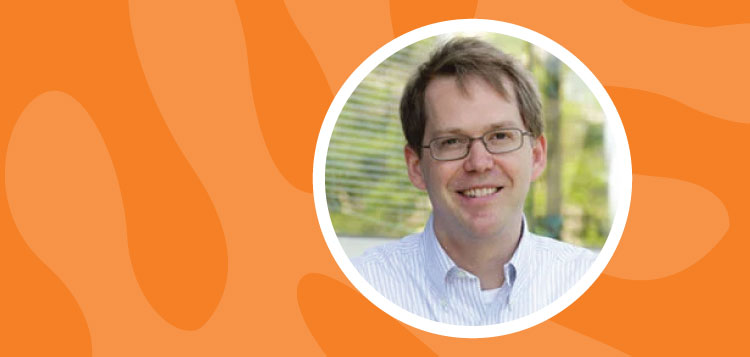
William Greenleaf: Breaking Disciplinary Boundaries to Understand Biology
William Greenleaf has never let the traditional boundaries of scientific disciplines define his approach to research questions. “Maybe I have ‘scientific ADD’ or something, but I like the idea of trying new things and seeing where your way of approaching things can make contributions,” he says.
Throughout his training, Greenleaf has let his interests steer him from one field to another. Having majored in physics at Harvard University, he went on to pursue a diploma in computer science at the University of Cambridge before returning to the United States for a Ph.D. program in applied physics at Stanford University. Now, as a professor of genetics, his multidisciplinary training comes together to drive the development of new DNA sequencing methods to study how genes are regulated.
At Stanford, Greenleaf was mentored by Steve Block, a biophysicist who specializes in biomolecular motors, which are proteins that convert chemical energy into motion. Greenleaf was particularly interested in an enzyme called RNA polymerase, which is important for transcribing DNA into RNA, an essential molecule for making proteins and controlling gene expression. During DNA transcription, RNA polymerase moves along the DNA strand, reads its genetic code, and rewrites that code into RNA. “A lot of what we were working on is really basic understanding of how fundamental biological processes in cells work,” he says.
Greenleaf wanted to figure out how the transcription process works and how the RNA polymerase knows where on the DNA strand to stop transcribing the genetic code. To tackle these questions, he needed to get a closer look at this intricate machinery. But technology that could resolve the motion of single molecules at this high resolution had yet to be invented.
So, Greenleaf and his colleagues made improvements to an optical trapping system so that it could detect every step of the polymerase’s movement along the DNA strand. “You could say it was a methodological challenge,” he says. Using this new method, the scientists were able to quantify how long the RNA polymerase dwells on each DNA building block, a measurement that formed the basis for a new way of sequencing DNA.
Greenleaf continued to advance DNA sequencing technology as a postdoc in the lab of Xiaoliang Sunney Xie at Harvard. There, he helped develop a high-throughput, low-cost method to sequence DNA. “After coming out of a lab where we were measuring probably 1500 molecules in a year, the idea that you could measure 150 million molecules in an experiment was really exciting,” he says. “I was really convinced that the sequencing instrument was a tool for doing digital, quantitative biology. And I think that really stuck with me moving into my own lab.”
In 2011, Greenleaf returned to Stanford as an assistant professor in the genetics department and decided to focus his research on understanding how human genes are regulated by the physical structure and function of the whole genome and how that interaction influences health and disease in humans.
The human genome is a 2-meter-long structure made of DNA and proteins that is scrunched up to fit into the micrometer-sized nucleus of a cell. The way this genome is packaged or bound up determines what areas of the genome are available for other molecules to interact with and activate genes. “Every cell in your body has the same genome, but the cells are incredibly different; blood cells, brain cells, fat cells, and reproductive cells, they do incredibly different things,” he says. “And that’s all governed through physical interactions of proteins and DNA.”
To study this physical interaction, Greenleaf and his team set out to develop a new method that could identify parts of the genome that are accessible to other molecules. The idea was that this physical access would facilitate interactions that allow genes to be switched on or off, and that identifying these regions would reveal the way genes are controlled.
It was an ambitious project to take on during the already challenging transition to becoming a principal investigator. “There’s a lot going on. You’re trying to hire the first people, you’re trying to come up with ideas,” he says. “You have to come up with things that are ideally high impact and have a high probability of success, which are hard to find.”
Greenleaf pitched his research idea to the Rita Allen Foundation Scholars program in 2013. “I didn’t think the interview went that well, but I guess it did!” he says. “I didn’t necessarily have a ton of preliminary data—maybe one publication around that time of application. So it was a really risky thing that Rita Allen bet on. I thank Rita Allen for enabling that.”
The Scholars award was one of Greenleaf’s first independent grants and “a nice vote of confidence,” he says. The funding enabled his lab to build everything he needed to develop the new method—known as ATAC-Seq, or Assay for Transposase-Accessible Chromatin with high-throughput sequencing—which has become a very commonly used genomic tool.
Since developing ATAC-seq, Greenleaf and his team have been expanding the application of the technique to study gene regulation in cancer and viral infection. In 2020, they applied it to research on human fetal brain development in a three-dimensional brain organoid model. Using this method, they were able to map genes and variants associated with neurological conditions such as schizophrenia and autism spectrum disorder.
More recently, the Greenleaf lab has applied deep learning models to predict which areas of the genome within a cell are accessible to molecular interactions. “You can use these models as an interpretive engine, and ask, for example, if I see a mutation in somebody with autism, is this mutation especially likely to disrupt the regulation of important genes in brain development?” This application could serve as a powerful tool to identify unknown gene variants that lead to certain biological conditions, he says. “I think that actual application to human biology is quite exciting.”
The Greenleaf lab is now developing single-molecule methods to map the molecules that interact with the genome, with the aim of building a model of all the elements that drive gene expression. Such a biophysical model, he says, “would allow us to really grab onto human biology and understand it from first principles.”
Greenleaf recently shared a few reflections on his career and the Rita Allen Foundation Scholars program.
What are some of the challenges you’ve had to overcome during your research career?
There are challenges in having a family and doing science, and also having a significant other. There’s an expectation when you’re looking for a scientific job that you could move anywhere at any time, and that’s a tough bar for a lot of people. I was lucky to have the flexibility to do that, and a wonderful wife who took care of our kids and did more than her fair share of the work so that I could do academic stuff, even though she was training to be a physician, then a practicing physician, and working really hard too.
What do you think is the impact of the Rita Allen Foundation Scholars Award?
In this funding environment, where oftentimes people get funded based on their prior research track record, it’s hard to jump off and do something pretty unrelated. There are a few funding mechanisms that allow that kind of thing, but they’re rare and hard to get. Rita Allen is one of the few, so that’s great.