Icon of chat bubbles

Stories

Axel Nimmerjahn – An Interdisciplinary Path to Make the Invisible Visible

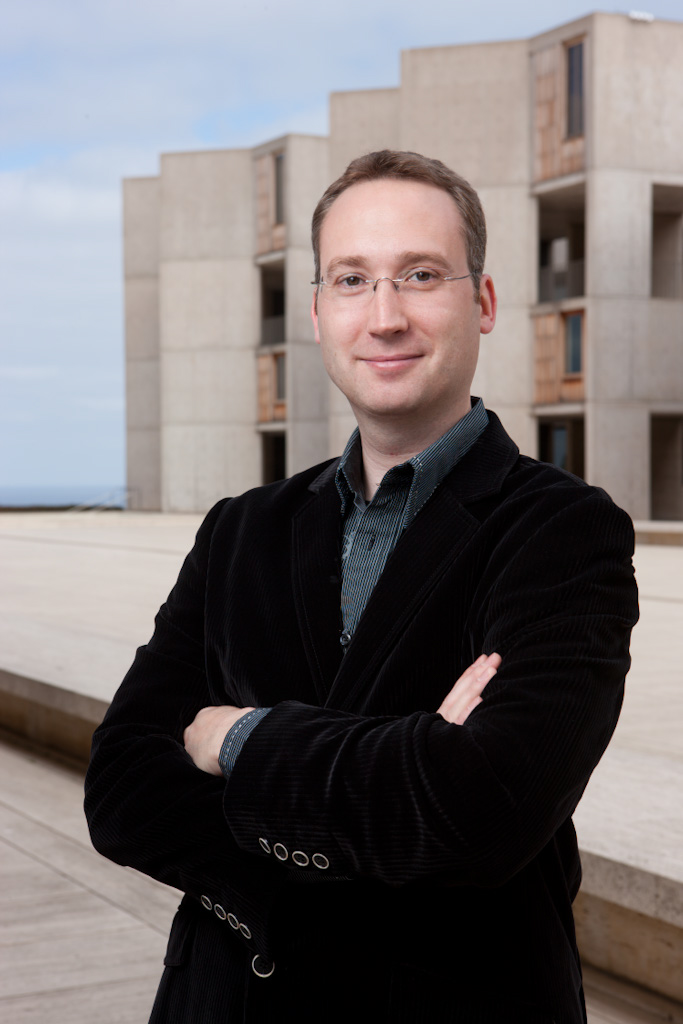
They say a picture is worth a thousand words, but how do you create an image of real-time interactions inside the nervous system? “For the brain and spinal cord, that's a little challenging. Our goal is to shed light on this ‘black box.’ For a very long time, we simply didn't have the technology [to study this], and so, we've developed that technology to open that box to look inside and see, how exactly does it work,” explains 2011 Rita Allen Scholar Axel Nimmerjahn. Growing up in Germany, Nimmerjahn was exposed to medical science and technology at a very early age. His parents worked in a hospital and would share patient stories around the breakfast table and take him and his brother to conferences. “I think both of us liked this very much,” says Nimmerjahn. This science storytelling connected another passion, “one of the things that really inspired me as a teenager was a magazine called P.M. That magazine focused on communicating the latest findings in the natural sciences and technology to a broad audience. I really devoured those journals. They sparked my interest in the natural sciences and physics in particular.”

Keep Reading

Rita Allen Foundation Supports Civic Science Journalism Cross-Field Collaborations

The Rita Allen Foundation and the Center for Cooperative Media are pleased to announce recipients of the Cross-field Collaboration Civic Science Journalism pilot initiative to seed and support new civic science journalism efforts and relationships. This new initiative stems from pioneering work that the Foundation and partners have been leading to create a culture of…

Keep Reading

Civic Science Fellows Program Invites Applications to Host a 2024–25 Fellow

The Civic Science Fellows program is announcing opportunities to become a Civic Science Fellow host partner for our next cohort, which will begin in March 2024. Innovative organizations are invited to apply to the Civic Science Fellows program to build engagement around anticipatory, emerging topics in science and technology, where…

Keep Reading

Elissa Hallem – A Pivot to Human Parasites

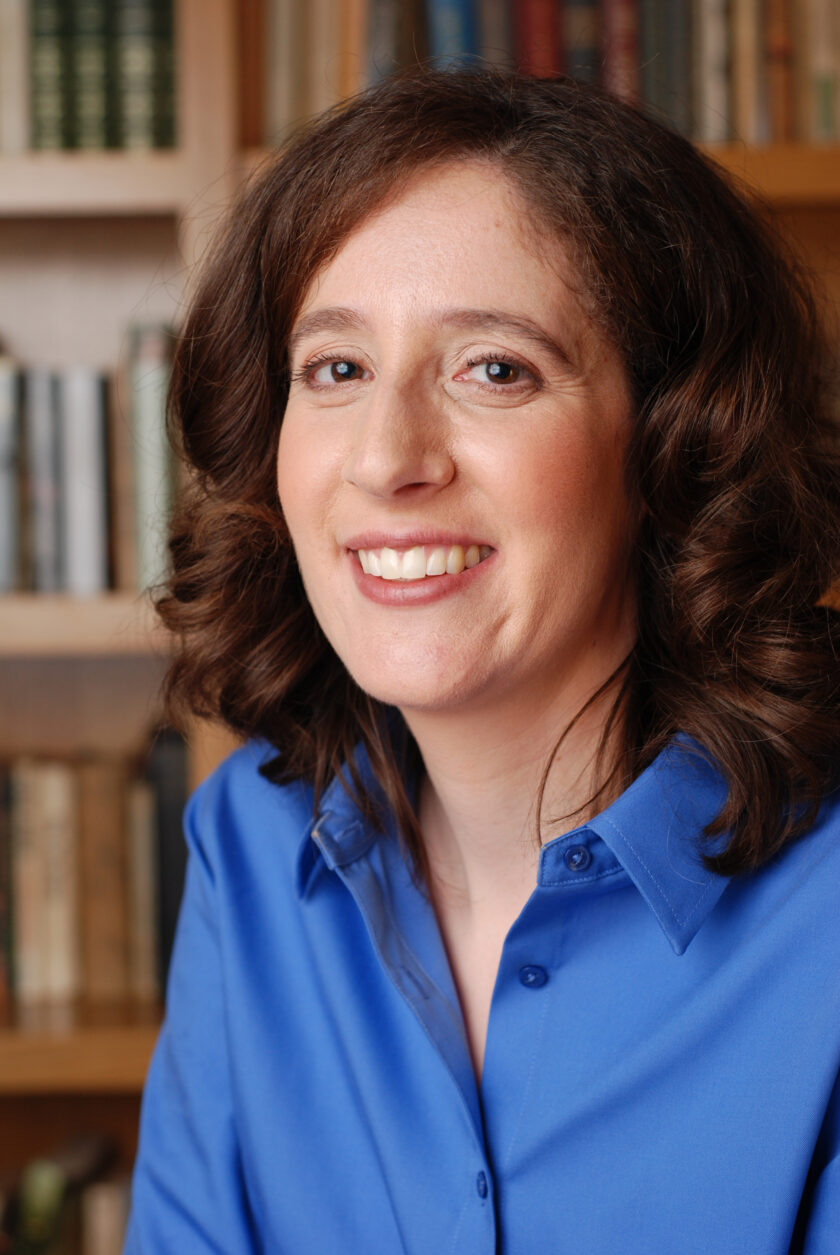
Elissa Hallem wasn’t always immersed in the world of parasitic roundworms. In fact, she spent much of her early research career studying Drosophila, the common fruit fly. Inspired to pursue research after participating in Johns Hopkins University’s Center for Talented Youth program, Hallem began volunteering in Larry Zipursky’s lab at the University of California, Los Angeles, while in high school. “Dr. Zipursky’s lab studies the visual system of Drosophila. This was the first time that I experienced a lab environment and what it was like to do research. It was an amazing experience that sparked my interest in a research career, and working with Drosophila was a lot of fun.”

Keep Reading

Maitreya Dunham: Budding Connections Inside and Outside the Lab

Maitreya Dunham gained research experience in many different fields as a student, from genetics to immunology to cancer, but one mighty model organism stuck with her as she set up her own lab to study experimental evolution and genetics: Saccharomyces cerevisiae. “That was one thing about the cancer world that was striking to me—how complicated things were—and there were so many aspects that remained unclear. So, when I learned about yeast, I thought, this is so teensy; six thousand genes, they must know the whole story by now, right? And that was manifestly not true!” As an undergrad, Dunham attended the Massachusetts Institute of Technology and worked in the lab of Bob Weinberg. She recalled that after reading an article about his research in telomerase, “I thought, wow, that sounds really exciting, and I talked to Weinberg to see if he had any positions open in his lab. I got to join his lab and had just a really great experience there, and also realized just how complicated cancer is.” After graduating from MIT, she went on to receive her doctorate in genetics from Stanford University. Now, as a professor of Genome Sciences with her own lab at the University of Washington, Dunham has developed a platform for high school students to set up their own yeast evolution experiments, which led to the publication of a paper using student data.

Keep Reading

E. Alfonso Romero-Sandoval – Research Sparks, Supports, and Perseverance

“One night, Jorge Lopez, my mentor in Guatemala during medical school, was playing the piano at a social gathering. While playing, he turned to me and said, ‘Can you imagine how many action potentials are triggered from my fingers and how many in your brain to interpret all this as music?’ I think that was the event that triggered my interest in understanding how the human body works,“ recalls E. Alfonso Romero-Sandoval. “After that, he was instrumental in helping me to obtain a scholarship to start my Ph.D. in Spain. My mentor in Spain, Juan Herrero, did the rest; and he showed me how to record and visualize action potentials to study pain.” Romero-Sandoval, now an associate professor of anesthesiology at Wake Forest University School of Medicine, began his journey into pain research with sparks from these mentors, in medical school at Universidad de San Carlos de Guatemala (Guatemala) and in graduate school at Universidad de Alcalà (Spain). As a graduate student studying the biology of pain, Romero-Sandoval learned how the nociceptive system works—which is responsible for processing noxious stimuli, like injury and extreme heat or cold. “I was learning how to record neuronal activity, the electrical activity that travels from the toes to the brain to generate what we perceive as pain. I knew what this electrical activity meant and how this activity is generated at the molecular level. I had actually seen the shape of an action potential recording in my textbooks—however, when I saw a neuron's live electrical activity, that was almost magical! Seeing the electrical activity in real-time was my very first impactful research experience,” explains Romero-Sandoval.

Keep Reading

Rahul Kohli – Physician Scientist: Exploring the Genome Changes to Inform Medicine

“When I was a kid, it was math that always really fascinated me—I loved logic games. Sitting around doing puzzles with my dad or math questions, that got me going in that direction of problem solving,” remembers Rahul Kohli. As a high school student, Kohli began to see connections between his STEM classes—chemistry, biology, and math; specifically—and his interest in problem solving and logic puzzles as foundational aspects of research. Kohli explains, “It was just about how to ask and answer questions and find a logical way to construct an argument. That aspect of chemistry and biochemistry was appealing to me, with the added benefit that I could see the translational impacts of what research could be.”

Keep Reading

Ye Zheng: Taking Risks to Understand Regulatory T Cells

2010 Rita Allen Scholar Ye Zheng’s career in immunology was sparked by action and reaction. During his childhood in China, he was encouraged to explore science by his parents who were both engineers—his father an electronic engineer, and his mother an automation engineer. He followed their advice and discovered a strong aptitude for chemistry thanks to a high school teacher who introduced him to the scientific method and experimentation. Zheng recalls, “I was just fascinated with all these different elements. That they can attract each other, and when you put them in liquids together, a reaction occurs—a precipitation forms, or bubbles, or the color changes. I always was fascinated by this, and that’s probably the first time I really wanted to actually do some kind of research.”

Keep Reading